Protecting Natural Stone on Luxury Yachts During South Florida Summers
Luxury yachts are designed to look exceptional from every angle. Polished stone, elegant cabinetry, custom fixtures, and carefully selected finishes all contribute to the experience.
But keeping those finishes beautiful while a yacht is in use is a different matter.
South Florida summers can be particularly demanding on natural stone. Heat, humidity, salt air, moisture, sunscreen, food, drinks, and constant movement between indoor and outdoor areas can all contribute to wear.
For yacht owners and managers, regular stone care is not simply about appearance. It is part of protecting the finish and maintaining the quality of the vessel.
Why Natural Stone Is Used on Luxury Yachts
Natural stone brings an unmistakable sense of luxury to a yacht.
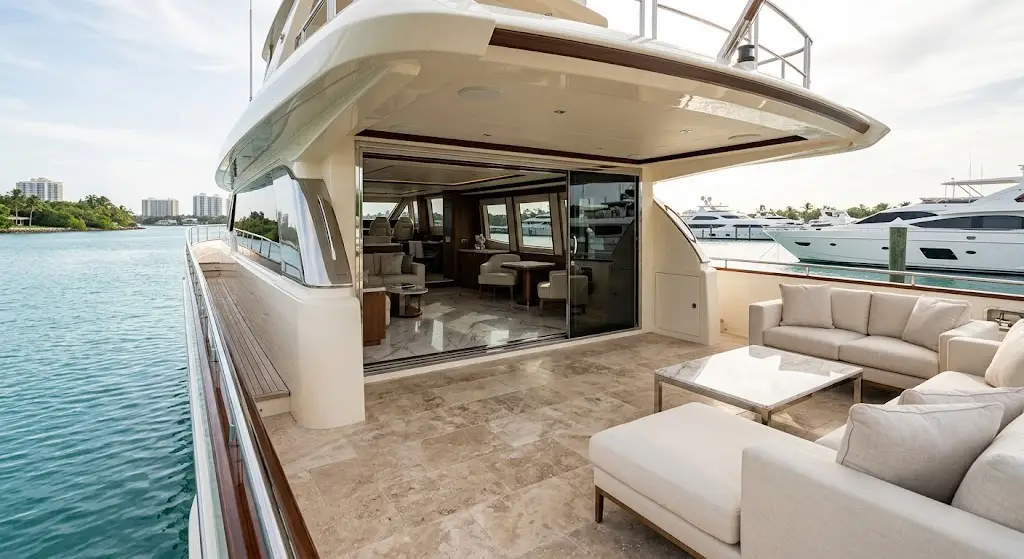
Depending on the vessel’s design, stone may be found on:
- Interior flooring
- Bathrooms
- Vanities
- Galley surfaces
- Dining areas
- Staircases
- Exterior entertaining areas
- Tables and countertops
Marble and other natural stones can create a sophisticated appearance that complements the yacht’s interior design.
But the marine environment presents challenges that a residential interior does not.
South Florida Summer Creates a Unique Environment
During the summer months, yachts in South Florida are exposed to heat, humidity, rain, salt air, and frequent outdoor activity.
Moisture can enter through doors and exterior areas. Salt and other residue may accumulate on surfaces. Sunscreen, oils, food, and beverages can create additional cleaning concerns.
A yacht may also move between very different environments during a single trip.
That means natural stone maintenance needs to account for how the surface is actually being used.
Salt and Residue Should Not Be Ignored
Saltwater is part of the boating environment, but that does not mean residue should simply be left on stone surfaces.
Salt and other deposits can accumulate around frequently exposed areas.
Regular cleaning helps prevent buildup from becoming a larger appearance or maintenance issue.
Exterior areas deserve particular attention because they receive the most direct exposure.
Sunscreen and Oils Can Create Problems
A beautiful stone surface near a swimming area or outdoor seating area can quickly become exposed to sunscreen, body oils, food, and beverages.
These substances may leave residue or contribute to staining depending on the type of stone and its finish.
Prompt cleanup is one of the simplest ways to reduce the chance of a small spill becoming a bigger maintenance problem.
On a yacht, that can be especially important because the same areas may receive heavy use during entertaining.
Use Stone-Appropriate Cleaning Products
Natural stone should not automatically be cleaned with whatever product happens to be available onboard.
Some household and industrial cleaning products may be unsuitable for particular stone types or finishes.
A stone-safe cleaning product and the correct cleaning procedure are important parts of a maintenance program.
When there is uncertainty about an existing finish, professional evaluation can help determine the appropriate approach.
Different Stones Have Different Needs
One of the most important principles of yacht stone care is that natural stone is not one-size-fits-all.
Marble, granite, limestone, travertine, and other stones have different characteristics.
A cleaning or maintenance procedure that is appropriate for one material may not be appropriate for another.
The stone’s finish also matters.
A polished surface may require different care from a honed or textured finish.
Don’t Wait Until the Stone Looks Damaged
Preventive maintenance is usually easier than trying to correct years of accumulated wear.
Yacht owners and managers should pay attention to changes such as:
- Dull areas
- Persistent stains
- Water marks
- Surface residue
- Scratches
- Worn traffic areas
- Changes in the finish
A professional evaluation can help determine whether the issue is simply a cleaning concern or something that requires more specialized restoration.
Professional Stone Care on a Yacht Requires Planning
Restoring stone on a yacht is different from working in an empty room on land.
The vessel may have guests, crew, furniture, equipment, and scheduled departures.
Work may need to be coordinated around the yacht’s itinerary and operational requirements.
That makes communication and planning especially important.
A professional stone restoration company should understand that the objective is not simply to work on the stone. The work needs to fit the environment in which the yacht operates.
The Challenges of Maintaining Marble and Stone Surfaces on Yachts
Keeping Luxury Stone Looking Its Best
The most effective yacht maintenance programs combine routine care with professional attention when needed.
Simple daily habits can make a difference:
- Clean spills promptly
- Remove residue from exposed surfaces
- Use appropriate stone-safe products
- Avoid abrasive cleaning methods
- Pay special attention to high-use areas
- Have unusual changes evaluated before they become worse
Consistent maintenance helps protect the appearance of the yacht while reducing the chance that minor issues become major restoration projects.
A Yacht’s Stone Is Part of Its Luxury Experience
On a luxury yacht, the details matter.
A beautiful stone floor, polished vanity, elegant dining surface, or custom stone feature can contribute significantly to the vessel’s overall atmosphere.
Keeping those surfaces properly maintained helps preserve the design investment and the experience guests expect.
Conclusion
South Florida summers can be demanding on natural stone, particularly aboard luxury yachts where heat, humidity, salt, moisture, and heavy use come together.
The best approach is not to wait until a stone surface looks severely worn. Regular care, appropriate cleaning products, prompt attention to spills, and professional evaluation when necessary can help preserve natural stone throughout the vessel.
For yacht owners and managers, protecting the stone is another way of protecting the investment that makes the yacht exceptional.
What Happens During a Professional Marble Restoration Project
Professional Yacht Stone Care
Marble And Stone Estate Restoration And Maintenance LLC provides professional natural stone restoration and maintenance for luxury yachts, estates, hotels, resorts, country clubs, commercial properties, and other high-end environments throughout Broward County and counties north of Broward County.
If your yacht’s natural stone surfaces have become dull, stained, worn, or difficult to maintain, contact Marble And Stone Estate to discuss a professional evaluation.
Natural Stone Institute stone care resources
Disclaimer:
The information provided in this article is intended for general educational and informational purposes only. Natural stone surfaces vary widely in composition, finish, age, prior treatments, installation methods, and environmental exposure. Because of these variations, results may differ significantly from one surface to another.
Any maintenance suggestions, observations, or restoration discussions presented on this website should not be interpreted as a universal guarantee, a substitute for in-person professional inspection, or a recommendation to apply chemicals, abrasives, or corrective procedures without qualified evaluation.
Marble and Stone Estate is not responsible for damages, discoloration, etching, scratching, staining, structural issues, or loss of finish resulting from independent attempts to replicate procedures, use cleaning agents, or apply restoration methods based on website content without direct professional consultation.
Some stock photography, illustrative renderings, or visual representations used throughout this website may include digitally enhanced or AI-assisted images for conceptual, educational, or decorative purposes. Such images are used solely to help demonstrate stone conditions, restoration concepts, or visual examples and may not represent every exact material condition or restoration outcome.
For stone-specific recommendations, testing, or restoration guidance, an on-site professional assessment is always advised before attempting any treatment.
Also, natural stone has a personality of its own and occasionally refuses to cooperate with internet advice.